Few sounds are as instantly recognizable as the deep rumble of a big American V8 — the sound of a uniquely American idea: that ordinary people should be able to buy extraordinary performance. That idea created the muscle car, a breed built for straight-line speed, bold styling and affordable thrills, and one of the most beloved chapters in car history.
This guide explains what a muscle car actually is, how the phenomenon began, the icons that defined it, and why the legend refuses to die.
What Exactly Is a Muscle Car?
At its core, the muscle car formula is beautifully simple: take an affordable, mid-size coupe or sedan and drop in the biggest, most powerful V8 engine available. No exotic materials, no complex technology — just displacement, attitude and a price tag within reach of a working person.
They are not lithe European sports cars or ultra-expensive supercars. They are democratic performance — built for stoplight drag races, Friday night cruises and the sheer joy of acceleration. The classic ingredients: a long hood, a short rear deck, an aggressive stance, and an exhaust note that announces you long before you arrive.
The closely related pony car — a slightly smaller, sportier coupe — grew up alongside the muscle car, and the two overlap heavily. What matters is the spirit: big power, bold looks, and fun that does not require a fortune.
The Birth of the Breed: America in the 1960s
The muscle car was born from a perfect storm of post-war prosperity, cheap fuel, and a massive generation of young buyers hungry for excitement. By the mid-1960s, American manufacturers realized that younger drivers did not want their parents’ sensible sedans — they wanted speed, style and individuality.
The spark is widely credited to a mid-1960s model that stuffed a large V8 into a mid-size coupe and marketed it directly at young enthusiasts. It was an instant sensation, and rival manufacturers scrambled to answer with their own big-engine bruisers. Within a few short years, showrooms were full of machines with snarling grilles, hood scoops, racing stripes and names that sounded like they belonged in a boxing ring.
Drag racing was exploding in popularity, magazines celebrated quarter-mile times like sports scores, and the muscle car became a cultural symbol of freedom — as much a part of the 1960s as rock music and drive-in theaters.
The Golden Age: Icons That Defined an Era
The late 1960s and very early 1970s are remembered as the golden age of the muscle car, when the breed reached its peak in power, presence and variety. The icons of this era are still the cars enthusiasts dream about:
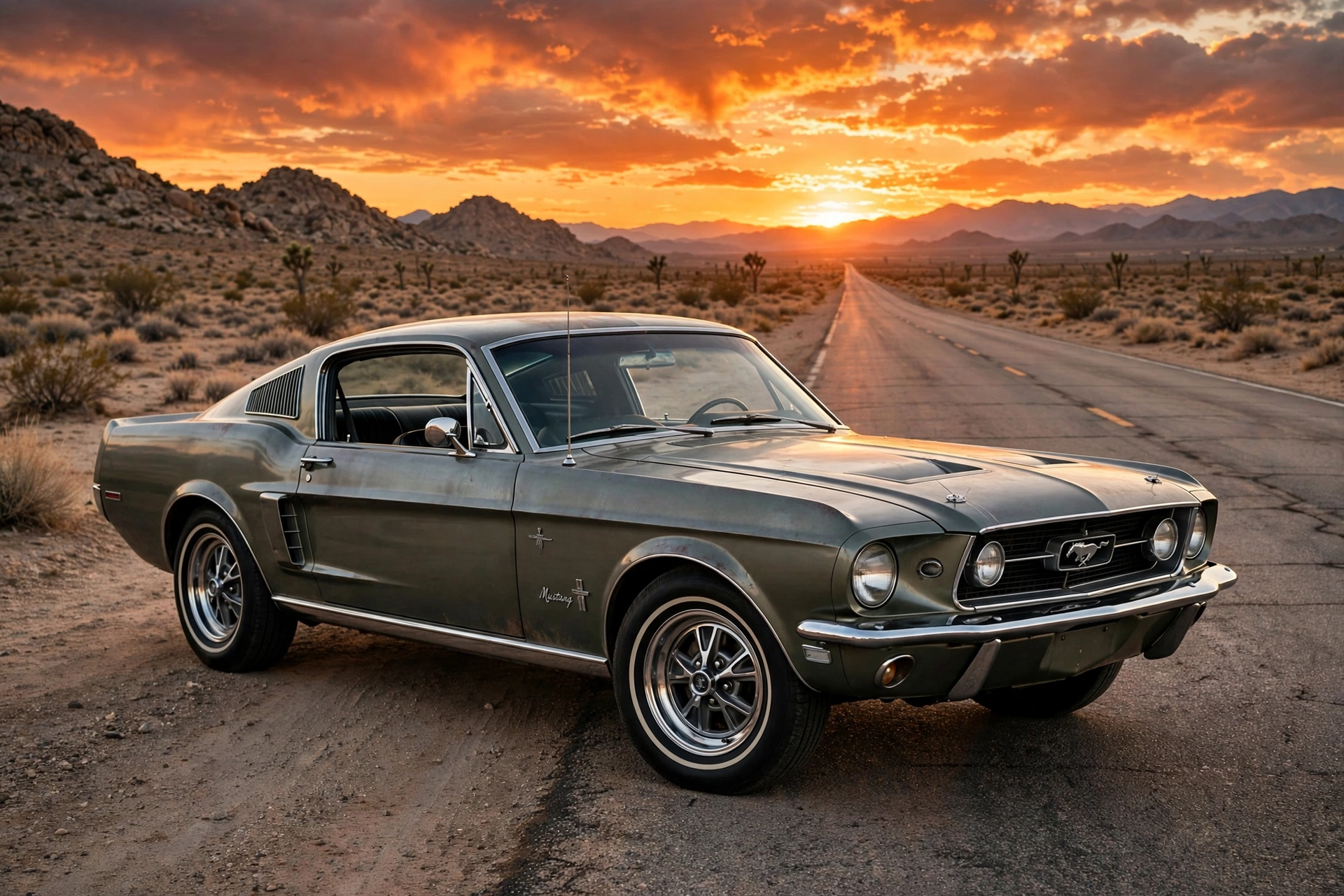
- The Ford Mustang — the car that proved the formula could be a runaway success, blending sporty style with big-engine attitude and becoming a cultural icon.
- The Chevrolet Camaro — born as a direct answer to the Mustang, with sharp styling and a devoted following of its own.
- The Dodge Challenger — the dramatic late arrival with bold, wide proportions and an unapologetically in-your-face personality.
- The Pontiac GTO — the original template for the breed, the car that showed the industry the recipe worked.
- The Dodge Charger — with hidden headlights and a fastback silhouette, one of the most visually striking machines of the era.
- The Chevrolet Chevelle SS — the understated bruiser, proof the formula worked without flashy theatrics.
These cars shared an era when manufacturers competed openly for the performance crown and a teenager could realistically dream of owning the fastest thing on the street.
What Makes Muscle Cars Special
Strip away the nostalgia, and several qualities explain why muscle cars inspire such devotion:
The Sound
A big V8 at idle has a heartbeat-like lope no other engine quite reproduces — mechanical music that enthusiasts could identify blindfolded. It is a huge part of the appeal.
Mechanical Simplicity
Big engines, simple suspensions, minimal electronics — owners can actually work on them with basic tools, a hands-on connection modern cars rarely offer.
Straight-Line Attitude
Never about cornering precision — always about the launch: the shove when the light turns green, the theater of a burnout. That single-minded focus gives them unmatched character.
Accessibility
From the beginning, performance was not meant to be exclusive. That democratic spirit still defines the culture: welcoming, unpretentious, open to anyone who loves the rumble.
The Lean Years: When the Music Stopped
By the mid-1970s, tightening emissions rules, rising insurance costs and fuel crises squeezed the big-engine formula from every side. Engines shrank, power faded, and the muscle car became a shadow of itself — still wearing the stripes, but without the thunder underneath.
Yet those lean years proved the idea was stronger than any era. The names survived, clubs and car shows kept the flame alive, and fans never stopped believing the glory days could return.
The Modern Revival
In the 2000s, the muscle car roared back. Legendary nameplates returned with retro-inspired styling — long hoods, fastback profiles, heritage badges — wrapped around modern engineering: classic attitude with modern reliability and everyday usability.
Today’s muscle cars are faster and safer than their ancestors, yet preserve the essential character: rear-driven layouts, rumbling V8s, bold styling, fun over lap times. The formula was never about a decade — it is an attitude each generation rediscovers.
Owning a Muscle Car Today
You have two paths: a classic offers authenticity and the full vintage experience, along with the maintenance realities of an old machine. A modern interpretation delivers the spirit with warranty coverage and daily drivability.
Either way, check for rust and accident history on classics, budget for higher fuel and insurance costs, and buy the best-maintained example you can find. Join an owners’ club early — the community’s knowledge is worth more than any buyer’s guide.
More Than Machines: The Culture
Perhaps the most remarkable thing about muscle cars is the culture they created. Cruise nights, drag strips, restoration shops, online communities with millions of followers — the muscle car world is a living, breathing community that welcomes newcomers warmly.
That culture is exactly why the breed endures. A muscle car is never just transportation. It is a statement about what driving should feel like: loud, joyful, a little rebellious, and shared with friends. As long as people crave that feeling, the rumble will go on.

Arsalan Shaikh is the founder and editor of CarModels.online. A lifelong car enthusiast, he writes practical, jargon-free buying guides to help readers choose the right car with confidence — from first-time buyers to seasoned owners.