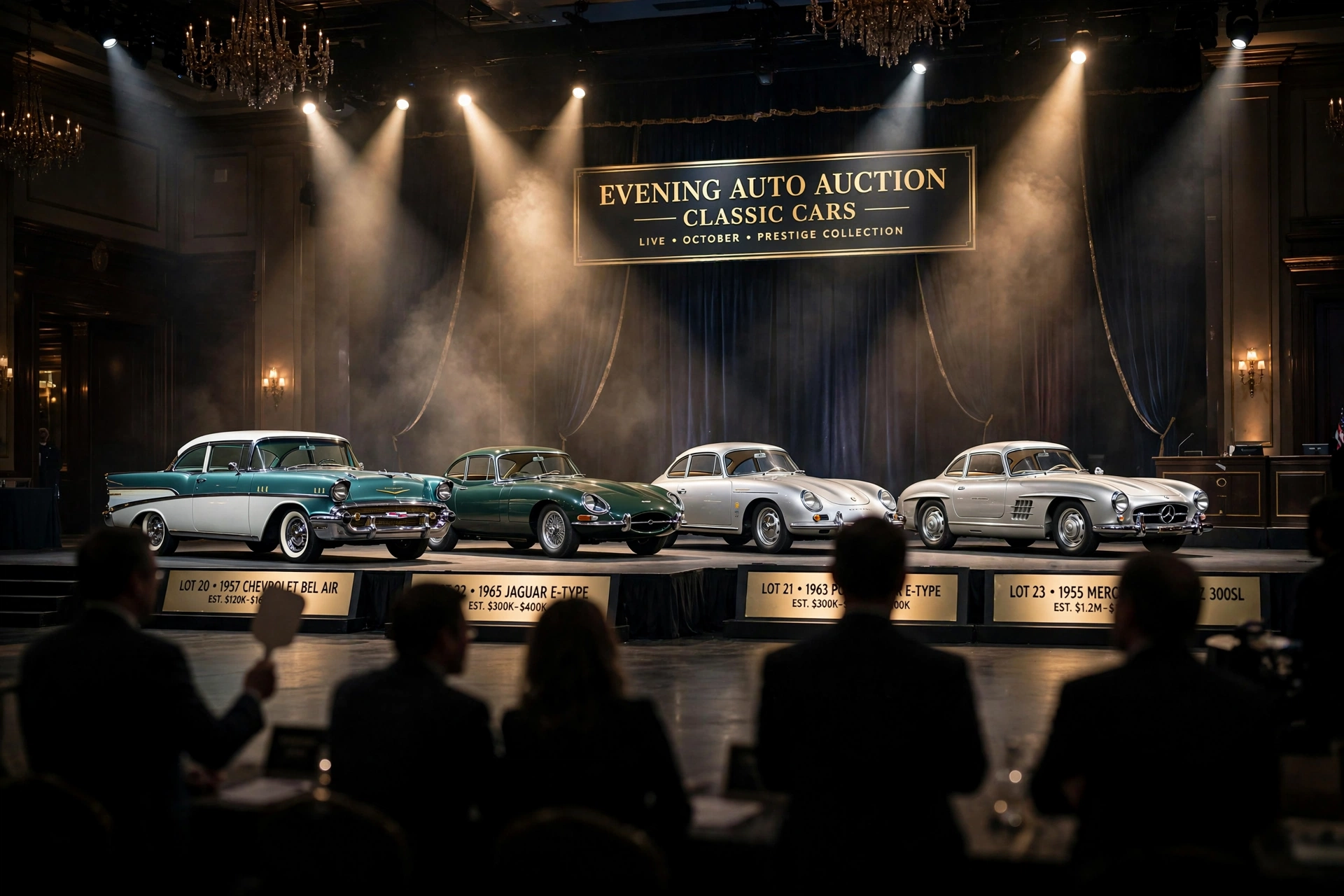
Nothing matches the electricity of a classic car auction: the crowd’s murmur, the auctioneer’s rapid chant, the tension as bidding climbs. Auctions offer buyers access to remarkable cars and sellers a room of motivated bidders — but beneath the theater lies a system with its own rules, costs and psychology, and walking in unprepared is an expensive education.
Whether you are dreaming of your first auction purchase or considering selling through one, this guide explains how classic car auctions actually work and how to bid with confidence instead of emotion.
How Classic Car Auctions Work
The basic mechanics are simple. Sellers consign their cars to an auction house, which catalogs each vehicle with a description, photographs and an estimate of expected value. Before the sale, there is usually a preview period — your golden opportunity to inspect cars in person, which serious buyers never skip.
On sale day, each car crosses the block in catalog order. The auctioneer opens bidding, buyers raise paddles or click buttons, and the car sells to the highest bidder when the gavel falls — the hammer price. Simple in theory; the details matter enormously.
Reserve vs No Reserve: What It Means for You
One of the most important terms to understand is the reserve — a confidential minimum price agreed between seller and auction house. If bidding does not reach the reserve, the car does not sell (it is “bought in” or “passed”).
A no-reserve auction means the car sells to the highest bid regardless of price. For buyers, no-reserve lots can offer genuine bargains — but they also attract fiercer competition, because everyone else knows it too. For sellers, no reserve guarantees a sale but risks a disappointing result on a quiet day.
Always check reserve status before falling for a car — there is no point setting your heart on a lot that cannot sell at your number.
Understanding the Real Price: Beyond the Hammer
Beginners routinely underestimate what an auction car actually costs. The hammer price is only the beginning:
- Buyer’s premium: the auction house adds a percentage-based fee on top of the hammer price. This is how auctioneers make their money, and it applies to every purchase — factor it into your maximum bid from the start.
- Taxes and registration: depending on your location, sales tax and registration costs apply just as with any vehicle purchase.
- Transport: unless you are driving the car home, budget for enclosed or open transport — especially for cars bought at distant auctions.
- Immediate needs: auction cars are sold as-seen. Tires, fluids, brakes and deferred maintenance may need attention before the car is road-ready.
The professional’s approach: decide your all-in maximum — hammer price plus every fee and cost — and then work backward to your maximum bid. Write that number down before the auction starts, when your head is clear.
Live Auctions vs Online Auctions
The classic car market now runs on two parallel tracks:
Traditional Live Auctions
The full theater experience — cars crossing a physical block before a live audience, often at glamorous venues during major automotive events. The atmosphere is unmatched, and inspecting cars in person during preview days is a huge advantage. The downside: travel costs, time, and an environment engineered to encourage emotional bidding.
Online Auctions
Dedicated online platforms have transformed the market, offering detailed photo galleries, condition reports, service documentation and moderated comment sections where knowledgeable enthusiasts publicly discuss each car’s strengths and flaws. Bidding happens over days rather than minutes, which rewards research over impulse.
Neither format is inherently better. Live auctions suit buyers who value in-person inspection and the event experience; online auctions favor patient researchers. Many serious buyers now use both.
How to Prepare Before You Bid
Preparation is what separates successful auction buyers from cautionary tales:
- Research the market. Study recent sale results for comparable cars — same model, condition and specification. You need to know what the car is actually worth before anyone asks you to bid.
- Inspect in person. For live auctions, attend the preview and examine the car thoroughly — or hire an independent inspector. Photos hide a multitude of sins. For online auctions, scrutinize every image, read the comments, and ask the seller direct questions.
- Check the paperwork. Verify title status, ownership history, matching numbers (where relevant) and any liens. A car with paperwork problems is a problem regardless of price.
- Set your walk-away number. Decide your absolute all-in maximum and commit to it in writing. The single most expensive mistake in auctions is bidding past your limit in the heat of the moment.
- Arrange logistics early. Have payment, insurance and transport sorted before you bid. Scrambling after the hammer falls is stressful and costly.
- Register properly. Most auctions require advance registration and sometimes a deposit or proof of funds. Handle this ahead of time.
Smart Bidding Tactics
With preparation done, these tactics keep you disciplined when the adrenaline flows:
- Watch first, bid later. Observe several lots before yours to gauge the room’s mood, the auctioneer’s pace and how reserves are being met.
- Bid with confidence, not aggression. Clear, prompt bids signal resolve. Hesitant, incremental nibbling invites competitors to test you.
- Never chase. If bidding passes your walk-away number, stop — immediately and without regret. Another car will always come along. The market is deep; your budget is not.
- Beware the “bargain” trap. A car selling cheaply at auction is often cheap for reasons the preview would have revealed. Price and condition are related.
- Factor in the premium live. When the auctioneer calls a number, mentally add the buyer’s premium before deciding your next bid. Many bidders forget this and overshoot.
- Consider absentee or phone bidding. If you know the room’s energy pushes your buttons, bidding remotely removes the theater — and the temptation.
After the Hammer Falls
Winning brings a to-do list: payment is typically due within a day or two, so have funds ready. Complete title transfer carefully, arrange insured transport, and get a mechanical check before serious driving. Auction purchases are generally final — diligence belonged before you bid.
If you were outbid, treat it as a win for your discipline. Note the final price for your market research — it is valuable data for the next opportunity.
A Quick Note on Selling at Auction
Auctions work for sellers too, particularly for unusual, high-quality or well-documented cars that benefit from competitive bidding. Choose an auction house with a track record in your car’s segment, present the car honestly with full documentation, set a realistic reserve, and time your consignment for an event that attracts your car’s natural buyers. Great presentation and honest descriptions consistently outperform hype.
Bid Smart, Enjoy the Theater
Classic car auctions are genuinely thrilling — and they are also one of the most efficient ways to buy and sell special cars. The buyers who do best are not the richest or the boldest; they are the most prepared. Research deeply, inspect carefully, set your limit in advance, and let discipline do the work. Do that, and you will enjoy the theater without becoming someone else’s cautionary tale.

Arsalan Shaikh is the founder and editor of CarModels.online. A lifelong car enthusiast, he writes practical, jargon-free buying guides to help readers choose the right car with confidence — from first-time buyers to seasoned owners.