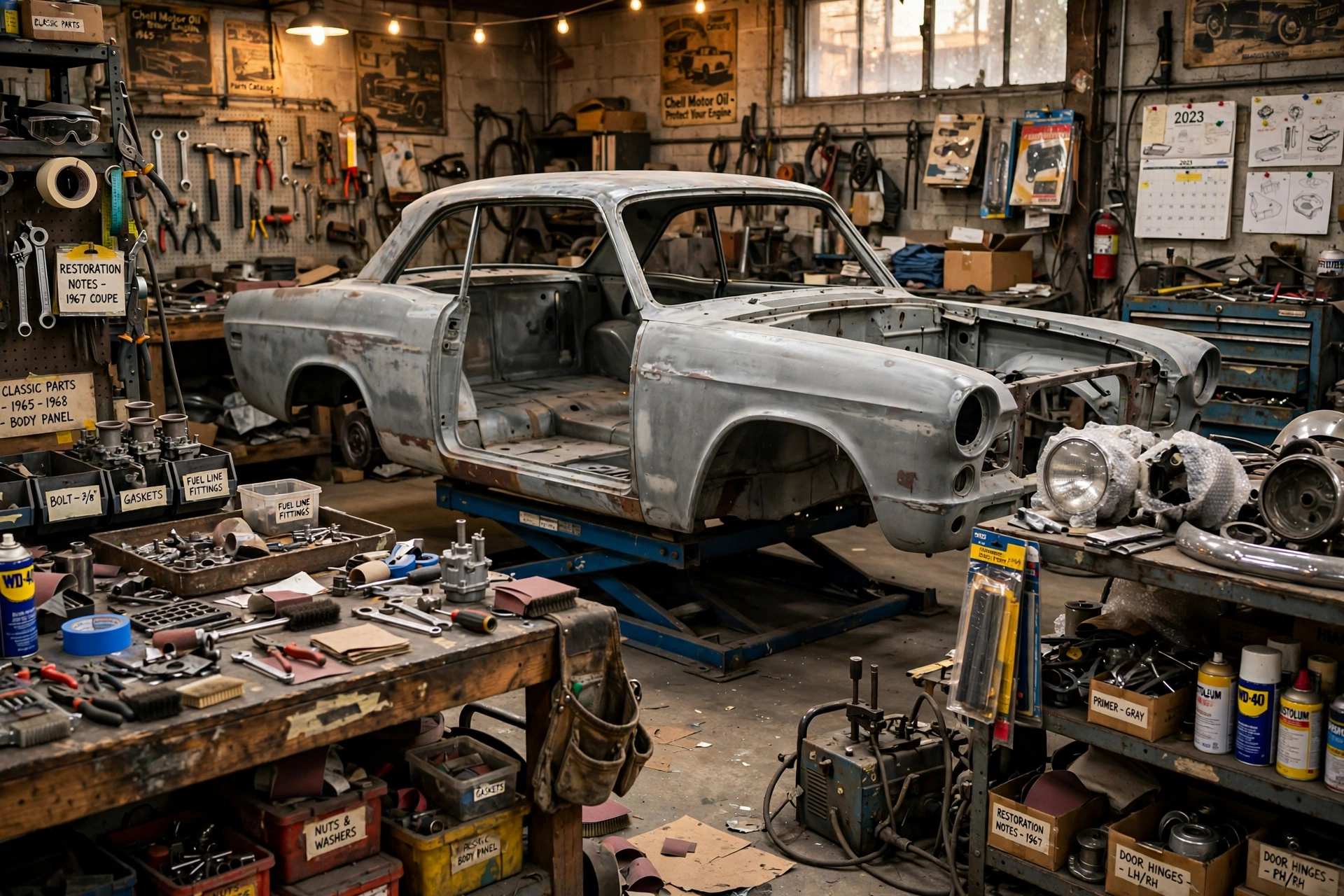
There is magic in bringing a tired old car back to life: the first turn of a rebuilt engine, the gleam of fresh paint, the smell of a retrimmed interior. Restoration is part craft, part archaeology and part love story — one of the most satisfying projects any enthusiast can take on.
It is also easy to underestimate. The classic car world is full of cautionary tales: budgets doubled, timelines tripled, dream cars become garage-bound money pits. This guide gives you the honest picture — what restoration involves, what it costs, how the process works, and the mistakes that trap beginners.
What Does “Restoration” Actually Mean?
Not all restorations are equal — know the levels before setting goals:
- Driver-quality: solid, safe and presentable for regular enjoyment — good but not perfect cosmetics. The sweet spot for most enthusiasts.
- Show-quality restoration: a much higher standard — straight panels, deep glossy paint, detailed engine bay, correct finishes throughout. Built to impress at local and regional shows.
- Concours-level restoration: the pinnacle — the car is returned to exactly as it left the factory, down to markings, fasteners and finishes. Enormously time-consuming and expensive, aimed at elite judged competitions.
- Restomod: a popular alternative where classic looks meet modern running gear — updated brakes, suspension, air conditioning and reliability, with vintage style intact. Not a pure restoration, but often the most enjoyable car to actually use.
Decide your target level before you start — most disappointment comes from paying for one level while expecting another.
The Honest Truth About Restoration Costs
Let us address the question every beginner asks: what does it cost? The uncomfortable truth is that restoration almost always costs more — often far more — than the finished car will be worth. Enthusiasts joke that you should take your initial estimate, double it, and add a contingency on top. The joke persists because it keeps proving true.
Why so expensive? Several factors conspire against your wallet:
- Hidden damage: rust and old poor repairs hide beneath paint. A solid-looking car can reveal serious structural work once stripped.
- Parts availability: common models enjoy good parts support; rare ones do not. Unobtainable trim may need fabrication at great expense.
- Labor intensity: bodywork and paint alone can consume a huge share of any restoration budget. Skilled panel beaters and painters are craftsmen, and craftsmanship is never cheap.
- Scope creep: “while we’re in there” is the most expensive phrase in restoration. Each small addition snowballs.
- Chrome, trim and interior: replating and retrimming cost far more than beginners expect — the details add up brutally.
The golden rule: set a total budget first, then add a contingency of at least a third for surprises. Get written quotes before committing, track every expense, and revisit the budget monthly. A restoration you can finish beats a perfect one you abandon.
The Restoration Process, Step by Step
While every project differs, restorations generally follow this sequence:
1. Assessment and Planning
Inspect the car thoroughly — ideally on a lift — and document everything with photos. Decide your target level, research parts availability, and build a realistic budget and timeline. This unglamorous phase determines success.
2. Disassembly and Documentation
Strip the car systematically, labeling and photographing every part as you go. Bag and tag hardware by location — overkill now saves weeks of confusion later. Assess each component: restore, replace, or refurbish?
3. Bodywork and Paint
The body shell is repaired — rust cut out and replaced with proper metal, never filler over rot — then straightened, primed and painted. This is the most skill-intensive phase and the worst place to cut corners; paint magnifies every flaw beneath it. Choose your shop by inspecting their finished work, not by price alone.
4. Mechanical Rebuild
Engine, transmission, suspension, brakes, steering and electrics are rebuilt or renewed. Many upgrade discreetly — better brakes, electronic ignition, improved cooling — for safety while keeping original appearance. A car that runs beautifully beats one that merely looks it.
5. Interior and Trim
Seats are retrimmed, dashboards refurbished, headliners replaced, and chrome either replated or replaced. Interior work transforms the car — it is what you see and touch every time you drive — so resist the temptation to leave it for “later.”
6. Reassembly and Sorting
The car goes back together in reverse order, guided by your documentation. Then comes the critical sorting phase: driving the car and fixing the inevitable list of leaks, rattles, electrical gremlins and adjustments. Budget real time for this — no restoration is truly finished the day it rolls out of the shop.
Beginner Mistakes to Avoid
- Buying the wrong starting car. The cheapest project is usually the most expensive restoration. Rust is the enemy — a solid, complete, running car costs more upfront but saves a fortune.
- Skipping the budget. “I’ll figure out costs as I go” is how projects die. Set a budget, add contingency, track spending, and be prepared to pause rather than cut corners when money runs tight.
- Letting scope creep run wild. Every “might as well” adds cost and months. Write down your goal at the start and judge every extra against it.
- Choosing a shop on price alone. The cheapest quote often means the least experience with your type of car. Visit shops, inspect finished work, talk to past customers, and get everything in writing.
- Restoring the wrong car for the money. Some models will never be worth what a proper restoration costs. That is fine if you love the car and plan to keep it — but know the economics going in, especially if resale matters to you.
- Doing everything at once. Beginners who strip a car to a bare shell on day one often end up with an overwhelming puzzle. Work in stages; keep the project drivable as long as possible.
- Neglecting paperwork. Keep every receipt, photograph every stage, and document part numbers. Good records protect your investment and massively help at resale time.
DIY vs Professional: Finding Your Balance
The smartest approach is a hybrid: handle disassembly, cleaning, research, parts sourcing and reassembly yourself, while entrusting specialists with bodywork, paint, machine work and anything safety-critical.
Be realistic about your skills, tools and space. Enthusiasm does not substitute for a welder’s eye or a painter’s booth. And remember that your time has value too — a professional might complete in weeks what takes you a year of weekends.
Is Restoration Right for You?
Restore a classic because you love the car and the journey — not as an investment, because it rarely is one. If years of patient work among parts catalogs sounds like heaven, you are ready.
Start with a solid, popular model with good parts support. Set an honest budget. Find a community of owners who have done it before. And take it one stage at a time. The day you drive your finished car for the first time, every late night and every setback will make perfect sense.

Arsalan Shaikh is the founder and editor of CarModels.online. A lifelong car enthusiast, he writes practical, jargon-free buying guides to help readers choose the right car with confidence — from first-time buyers to seasoned owners.