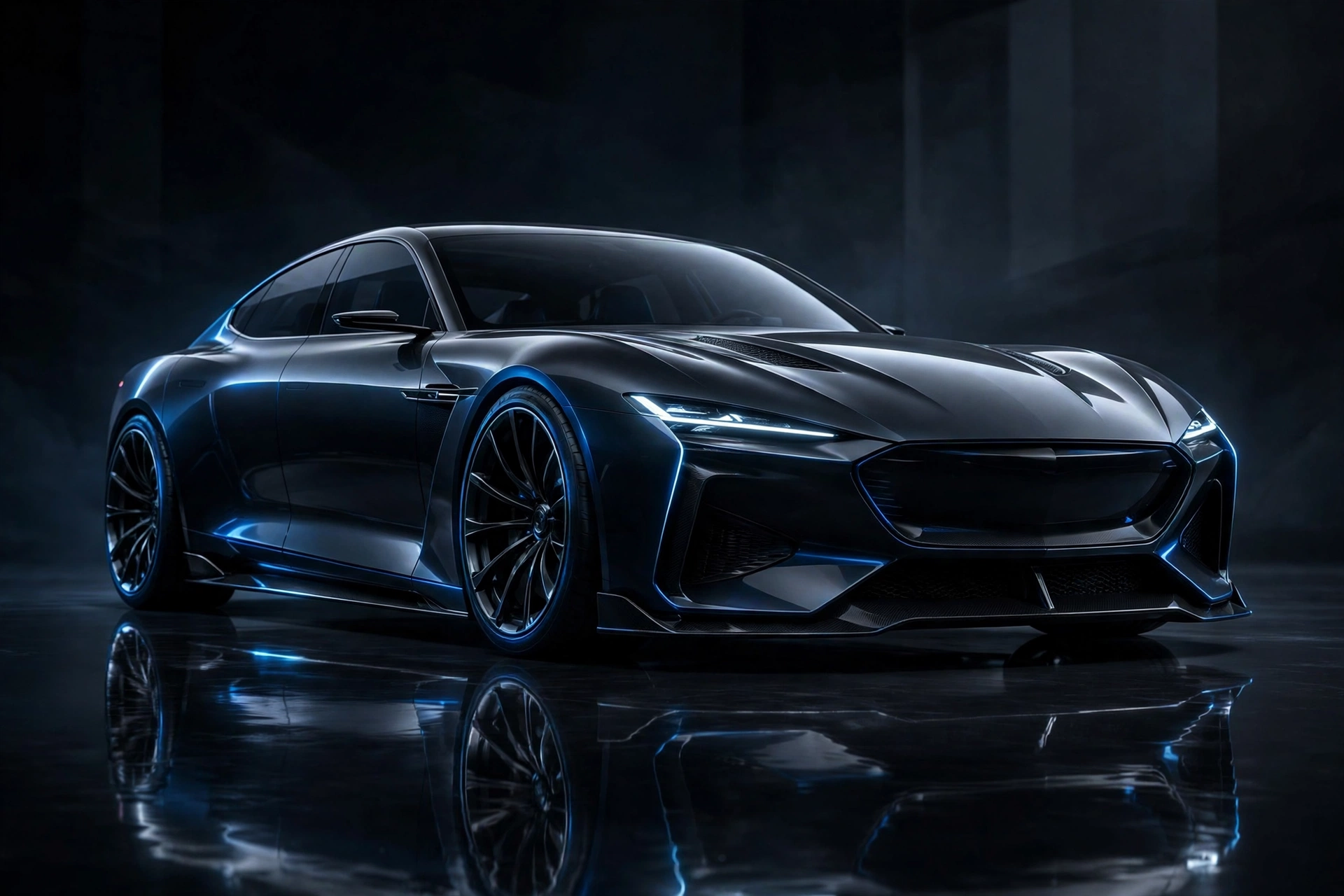
For nearly six decades, the AMG formula never changed: take a Mercedes, shoehorn in a hand-built V8, stiffen everything, and let the exhaust do the talking. That era just ended. Mercedes-AMG has revealed its first SUV developed entirely in-house — the all-electric Mercedes-AMG GT SUV — and it skips internal combustion completely. The headline number is almost hard to believe: the range-topping GT 63 is claimed to produce 1,169 horsepower, which AMG says is more than even the Formula 1-derived AMG One hypercar.
This is not a tuned version of someone else’s SUV. The GT SUV rides on a bespoke AMG.EA electric platform and was engineered in Affalterbach from a clean sheet — and it is a direct challenge to the electric performance SUVs American buyers are already shopping.
Three Flavors: GT 53, GT 55 and GT 63
AMG is launching the GT SUV in three variants, and the lineup reads like a deliberate ladder for performance buyers.
The entry point is the GT 53, with two synchronous electric motors — one on each axle — producing a combined 544 hp and 800 Nm of torque. A two-speed transmission on the rear axle is designed to give it both strong launches and efficient high-speed cruising. AMG claims a 668 km (about 415 miles) WLTP range for this version.
Step up to the GT 55 and the hardware changes completely: a three-motor layout with two ultra-compact axial-flux motors on the rear axle and one up front, good for 816 hp and 1,860 Nm of torque, with fully variable all-wheel drive shuffling power between the axles.
Then there is the flagship GT 63: the same three-motor concept pushed to 860 kW — 1,169 hp — and a mountainous 2,000 Nm (about 1,475 lb-ft) of torque. Even under sustained load, AMG says 530 kW (721 hp) of continuous output remains available, which is the figure the company keeps emphasizing to prove this is a real performance machine and not a one-trick drag racer.
The Performance Claims: 2.5 Seconds to 100 km/h
The numbers AMG is quoting for the GT 63 read like hypercar figures wearing an SUV costume. Zero to 100 km/h (62 mph) is claimed in just 2.5 seconds, with 0 to 200 km/h (124 mph) following in 6.8 seconds. Top speed is electronically limited to 270 km/h (168 mph), though that requires the optional Driver’s Package.
For context, the GT 55 needs 9.4 seconds to reach 200 km/h and the GT 53 takes 13.8 seconds — quick by any normal SUV standard, but they show how far the flagship pulls ahead.
It is worth remembering these are manufacturer claims, measured the way manufacturers measure them — including the one-foot rollout method AMG used for its acceleration figures. Independent testing will be the real judge, especially for repeated hard launches where battery heat becomes the enemy.
Battery, Range and 710 kW Charging
Two battery packs are on offer: 106 kWh in the GT 53 and 128 kWh in the GT 55 and GT 63. Both run on an 800-volt electrical architecture with directly cooled cylindrical cells — technology AMG says is derived from the AMG One program.
Range is quoted at up to 700 km (about 435 miles) on the WLTP cycle for the larger battery, with the usual caveat that WLTP figures are optimistic and EPA ratings — the ones that matter to American buyers — have not been announced yet. Expect the EPA number to land noticeably lower.
The charging claims are where things get genuinely wild. AMG says the GT 53 can accept up to 600 kW on a DC fast charger, while the GT 55 and GT 63 can take up to 710 kW — enough, in theory, to add around 440 to 450 km of range in ten minutes. The catch is the phrase “under suitable conditions”: chargers that powerful barely exist in the wild yet, including in the United States. Think of 710 kW as future-proofing rather than something you will use this year.
The Tech Underneath: Axial-Flux Motors and AMG.EA
The most interesting engineering story is not the headline power but how AMG makes it. The rear drive unit packs two pancake-thin axial-flux motors — supplied by British specialist Yasa — each with its own planetary gearbox inside a shared housing. Both motors and gearboxes are oil-cooled, and water-cooled silicon-carbide inverters manage the enormous electrical loads.
Axial-flux motors are smaller, lighter and more power-dense than the radial-flux motors in most EVs, which is how AMG fits this much performance into a five-seat family SUV. The chassis gets AMG Active Ride Control+ as standard on the GT 63, and the whole package sits on a 5.09-meter body with a 3.04-meter wheelbase — roughly the footprint of a full-size American SUV.
Practicality has not been forgotten either: 607 to 1,740 liters of cargo space plus a 78-liter frunk means it still works as a family hauler.
Design: Still an AMG, Even Without a V8
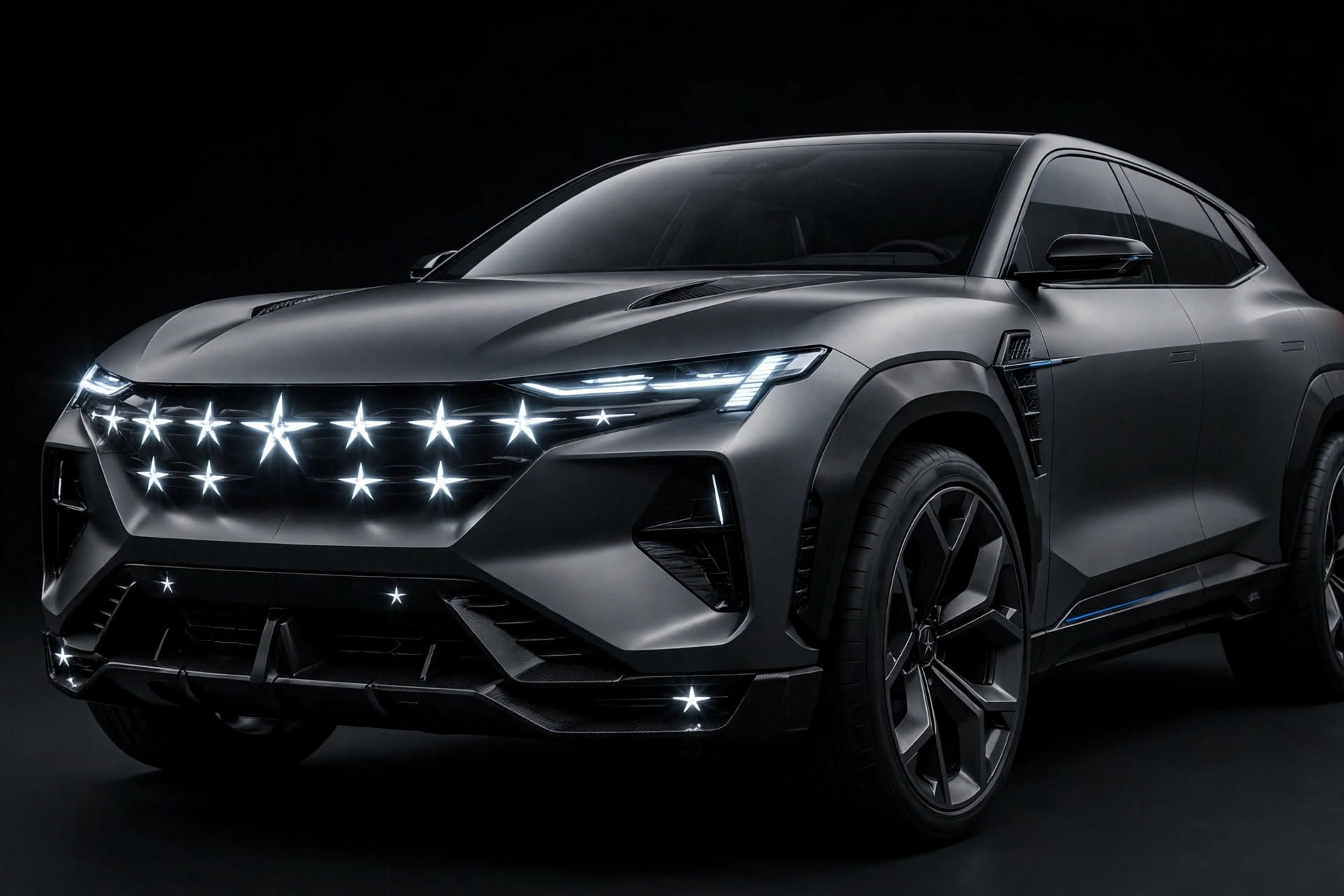
Visually, the GT SUV does not hide its intentions. An illuminated front grille, star-shaped daytime running lights, muscular wheel arches, a sloping roofline and wide rear shoulders give it the planted stance AMG buyers expect. Active aerodynamic elements and a deployable rear spoiler work to keep it stable — and efficient — at the speeds it is capable of.
Inside, it seats five in what AMG describes as a driver-focused cabin with its latest digital systems. Full US specifications, including interior details and option packages, are expected closer to the American launch.
Price and When You Can Get One
Mercedes-AMG has opened orders for the GT 53 first, with the GT 55 and GT 63 scheduled to reach customers in spring 2027. European pricing starts near €113,000 for the GT 53 — roughly $131,000 at current exchange rates — with the GT 55 and GT 63 expected above €150,000 (about $174,000). US pricing has not been announced yet, and American buyers should expect those numbers to shift once EPA certification, import costs and option packages are factored in.
What It Means for American Buyers
The GT SUV lands in a segment that is heating up fast. The Tesla Model X Plaid has owned the “absurdly fast electric SUV” conversation for years, and newer entries like the Lucid Gravity and high-output Rivian R1S have raised the bar for what a luxury electric SUV can do. None of them, however, carry the AMG badge — and none were engineered from scratch by a performance division with this kind of track record.
The real question for American buyers is not whether 1,169 hp is impressive — it obviously is — but whether the charging infrastructure and real-world range deliver on the promise. A 700 km WLTP claim and 710 kW charging sound spectacular on paper; on a real road trip, what matters is how fast it charges on the chargers that actually exist and how far it goes at 80 mph with the air conditioning on.
Still, the signal is unmistakable: the performance SUV wars have gone electric, and AMG — the company that practically invented the muscle-SUV formula with the old supercharged ML55 — intends to win them the same way it always has: with more power than seems reasonable. Enthusiasts who grew up on V8 thunder may need a moment to adjust. The stopwatch, as always, will have the final word.

Arsalan Shaikh is the founder and editor of CarModels.online. A lifelong car enthusiast, he writes practical, jargon-free buying guides to help readers choose the right car with confidence — from first-time buyers to seasoned owners.