It is not every day that a car reveal breaks the internet, but Tesla managed it on October 15, 2026 with its flying roadster. At a livestreamed event at SpaceX’s test facility in McGregor, Texas, the long-delayed second-generation Roadster did things no production car has ever done in public: it drove up a multi-storey curved ramp, continued along it upside down, flipped through the air, landed on its wheels, and then jumped clean over a row of parked Teslas. Video of the stunt passed 54 million views on X within a day, and Elon Musk closed the show with the line everyone quoted: “Turns out the future does have flying cars.”
So what really happened in Texas, how does the technology work, and how much of it will ever reach a customer? Here is the full story, with the verified facts separated from the claims.
What actually happened at the McGregor demo
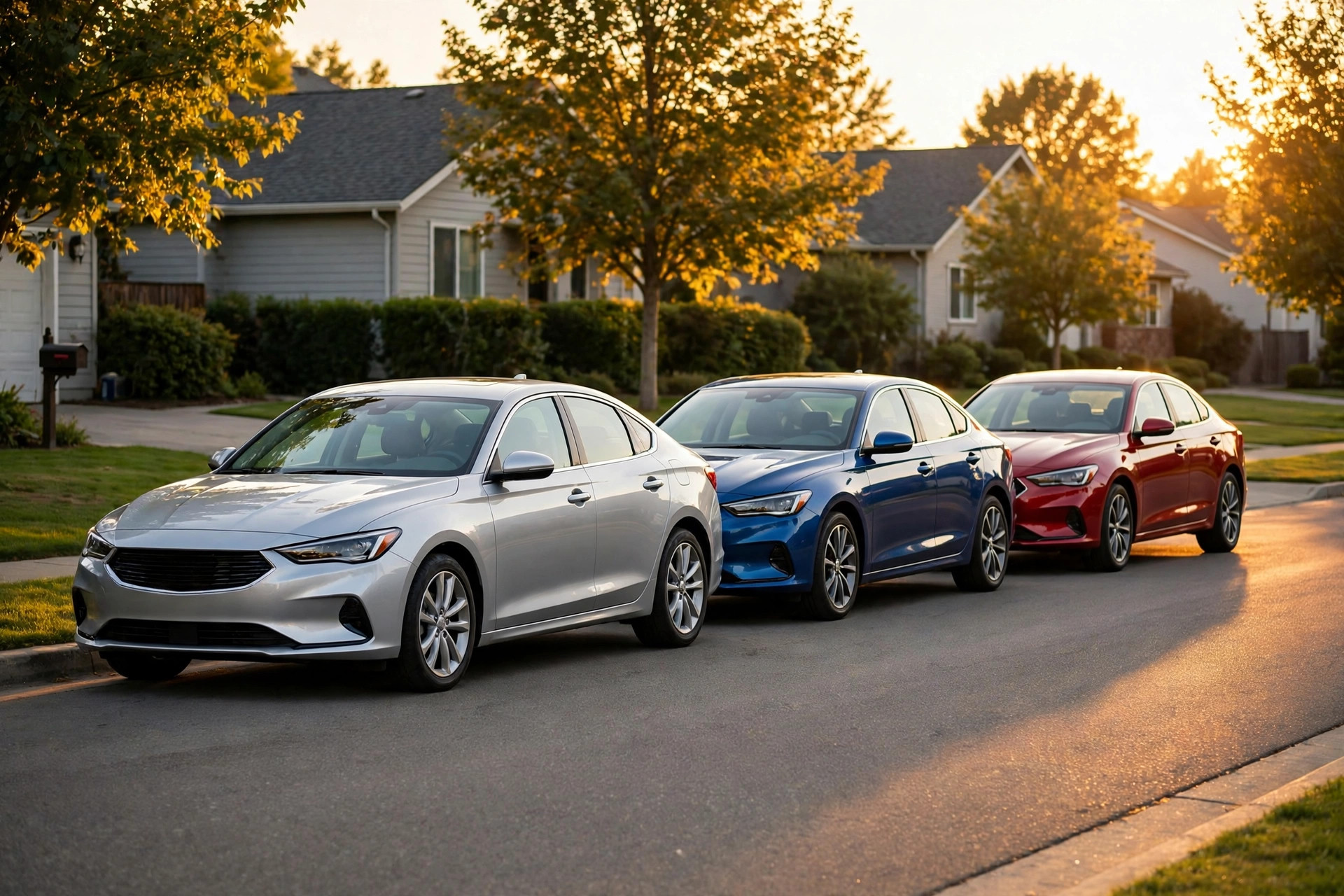
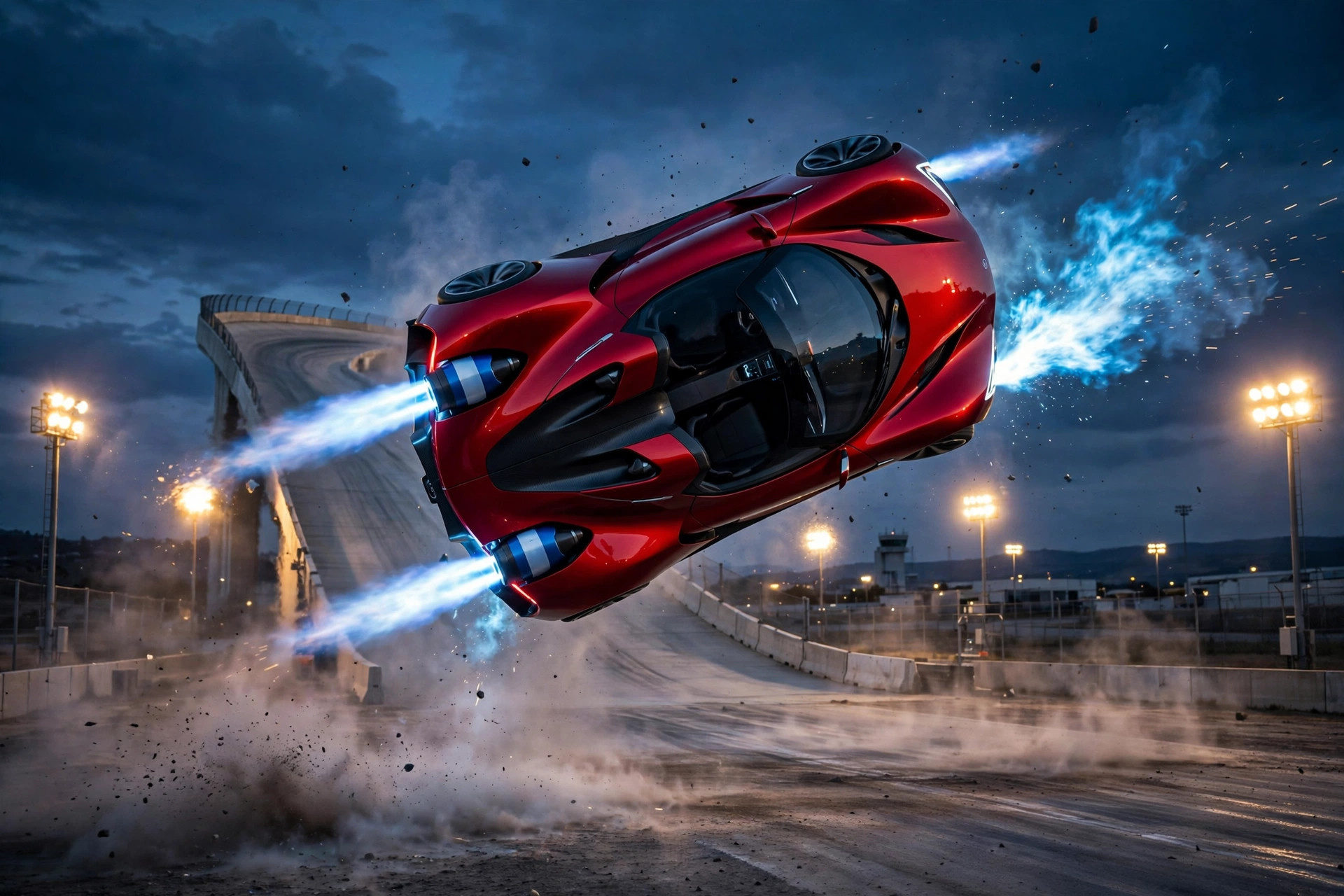
The demonstration lasted under half an hour and was performed by a prototype on a closed course. The car first climbed the curved ramp and hung upside down on it, held in place by an underbody fan system rather than by its tires. It then launched off the ramp, rotated in mid-air with visible bursts from small thrusters, and landed back on its wheels. A second stunt saw it leap over Tesla’s own lineup — a Model 3, Model Y, Cybertruck, Semi and Cybercab parked in a row.
Two details matter for honesty’s sake. First, the car was uncrewed and operated remotely — the figure visible inside was not a human passenger, and no driver was at risk during the stunts. Second, everything happened under controlled conditions on a specially prepared course. This was a genuine, remarkable engineering demonstration — but it was a demonstration, not a product launch in the normal sense.
How the flying roadster works
Two separate SpaceX-derived systems did the work, and they solve different problems:
- The suction fan system. Powerful fans beneath the car draw air out from under the floor, effectively sucking the car onto the surface. Tesla says the system can generate grip equivalent to more than 2g of downforce — enough, in the demo, to hold the car against the ramp while upside down, and in normal driving to corner far harder than tires alone allow (Tesla compares it with about 1.26g from tires).
- The cold-gas thrusters. Ten small nozzles around the car fire bursts of ultra-high-pressure air stored in two carbon-wrapped tanks of about 600 liters. The bursts push and rotate the car — steadying it in the air, helping it flip, and, in the road-going Thrust version, shoving it forward for acceleration. The system recharges its own air supply with an onboard compressor.
- Steer-by-wire controls. The car uses a yoke with by-wire steering, throttle and braking, and seats moulded into the chassis to save weight.
In short: the fans keep the car glued to the ground (or the ramp), and the thrusters push it around when the tires cannot. Neither system makes it an aircraft — the “flight” consists of brief, controlled aerial maneuvers measured in seconds.
The three versions: Performance, Thrust and Rocket
Tesla’s reservation page lists three versions of the new Roadster:
- Performance — the standard road car, with the suction fan system for extreme grip. Reservation deposit: a reported $50,000.
- Thrust — adds rear-facing acceleration thrusters to cut the 0–60 mph time below one second. Deposit: a reported $250,000.
- Rocket — a single-seat version with the full perimeter thruster system used in the Texas stunts. Invite-only — and, crucially, not approved for public roads.
No final price was announced at the event. When the Roadster was first shown in 2017, Tesla quoted a starting price of $200,000, but that figure should not be treated as confirmed pricing for this redesigned car.
The performance claims — and the asterisk
The numbers Tesla quoted are astonishing: a 0–60 mph time of 0.81 seconds timed on stage during the demo, under 1.6 seconds for the base Performance version, a top speed above 230 mph, and more than 300 miles of range. If a customer car ever repeats them, this would be the quickest production car in history by a wide margin.
Here is the asterisk: every one of those figures is a manufacturer claim. None has been independently verified on a production car, because no production car exists yet. The demo car was a prototype, driven remotely, on a closed course. History also counsels patience — this Roadster was first unveiled in 2017 with deliveries promised for 2020, and the target has slipped repeatedly since. The new production target is 2028.
So, is the flying car real?
Yes and no. The footage is real: a car really did drive upside down and leap through the air in Texas, using technology that works. But “flying car” in the everyday sense — a vehicle you can buy, drive to a destination and take off in — is not what was shown. The airborne moments lasted seconds, the full flight system belongs only to a single-seat version that cannot legally be used on public roads, and basic questions about safety certification, legality and practicality remain unanswered.
What the demo does prove is that the ideas are moving from science fiction into engineering. Extreme suction downforce could genuinely change how performance cars corner and brake, and thruster assistance — once a joke in a 2018 tweet — has now been demonstrated on a real vehicle. Whether it survives the journey to a 2028 production car, at a price anyone can pay, is the part we still have to wait for.
The bottom line: enjoy the spectacle — it earned its views. Just read the claims the way engineers do: a spectacular prototype demonstration, three versions on paper, deposits open, and a 2028 promise that Tesla now has to keep. If the Roadster’s numbers have you thinking electric, browse our car comparisons of today’s quickest EVs, and run the real-world charging math with our EV charging calculator.

Arsalan Shaikh is the founder and editor of CarModels.online. A lifelong car enthusiast, he writes practical, jargon-free buying guides to help readers choose the right car with confidence — from first-time buyers to seasoned owners.