America did not just build cars — it built rolling culture. From the machine that put the world on wheels to the chrome-laden cruisers of the 1950s and the personal luxury coupes of the 1960s, American classic cars tell the story of a nation’s optimism, ambition and love affair with the open road.
You do not need to own one to appreciate them. Understanding the great American classics enriches every car show you attend, every old movie you watch, and every conversation with a fellow enthusiast. This guide introduces the eras, icons and ideas that every enthusiast should know.
What Makes an American Car a “Classic”?
Age alone does not make a classic. Plenty of old cars are simply old. A true classic earns the title through some combination of historical significance, design excellence, cultural impact, or engineering innovation — the qualities that make people stop and stare decades after the car left the showroom.
American classics are distinctive because they reflect their country’s character: bold rather than subtle, generous in size, optimistic in spirit. Where European classics often prize delicacy and precision, American classics celebrate presence — long hoods, sweeping lines, gleaming chrome, and interiors built for continent-crossing comfort.
The Pioneer Era: Putting the World on Wheels
Every story of American motoring starts with the car that democratized it. In the early 1900s, automobiles were expensive toys for the wealthy — until mass production changed everything. The first truly affordable, mass-produced car proved that ordinary families could own automobiles, and in doing so reshaped cities, suburbs and daily life itself.
These earliest American classics are valued today less for luxury than for significance. They represent the moment the automobile stopped being a novelty and became a necessity — the foundation everything else was built on. Seeing one in motion, with its brass fittings and hand-cranked character, is like watching history drive past.
The Chrome Era: 1950s Glamour
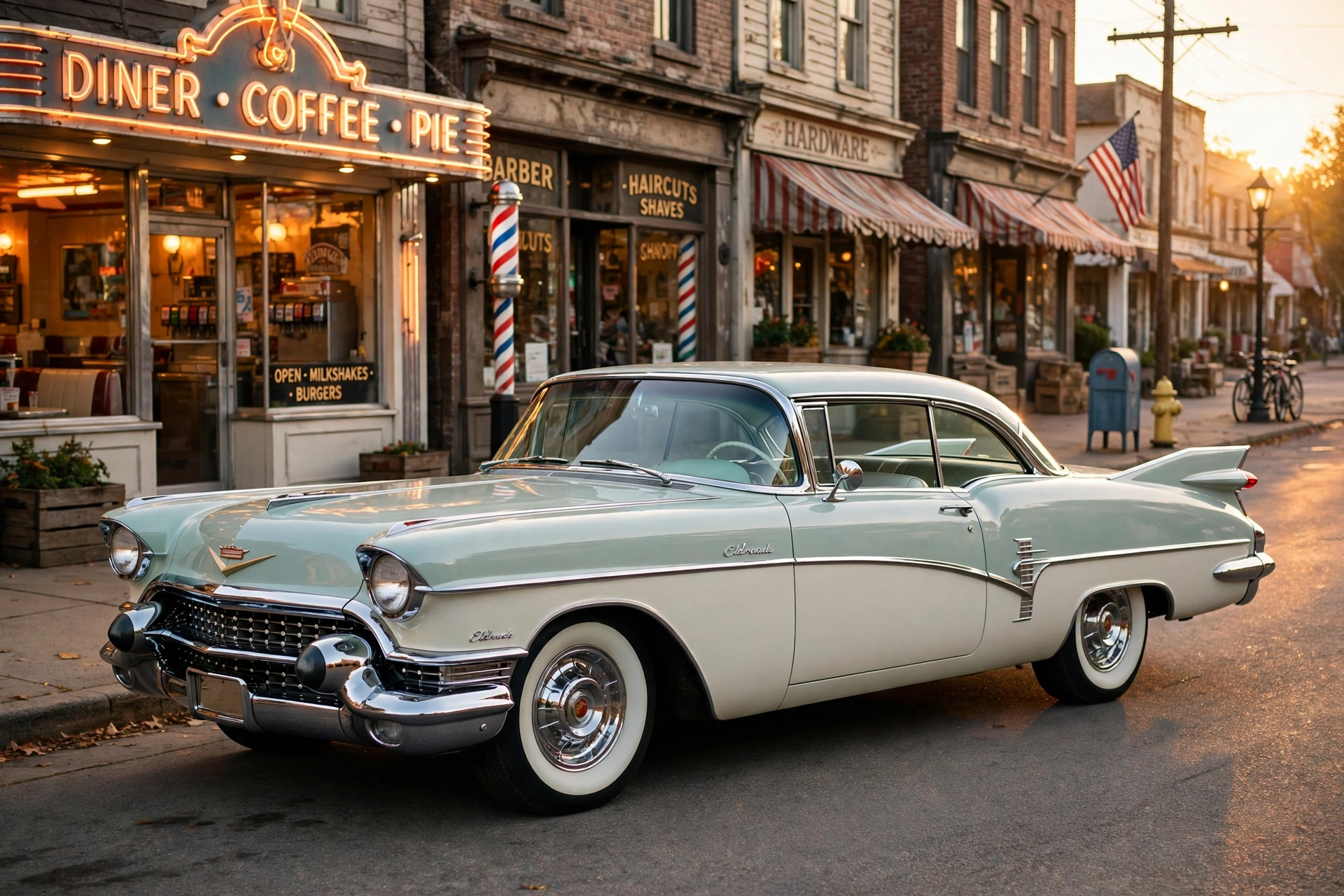
If one decade defines the popular image of the American classic, it is the 1950s. Post-war prosperity, cheap fuel and boundless optimism produced cars that looked like they were designed by people who believed the future had already arrived.
The hallmarks are unforgettable: towering tailfins inspired by jet aircraft, acres of gleaming chrome, two-tone paint in pastel shades, wraparound windshields, and interiors trimmed like living rooms. These were cars designed to be seen — cruising main street on a Saturday night was the whole point.
The era’s most beloved cruisers, with their iconic side trim and unmistakable profiles, remain the poster cars of the decade. They were not the fastest or the most sophisticated machines of their time, but they captured something no specification sheet can measure: pure, unfiltered joy. Today they are among the most recognizable and cherished classics in the world.
Personal Luxury: Style as a Statement
By the late 1950s and into the 1960s, a new idea emerged: the personal luxury car. These were stylish two-door coupes and convertibles that prioritized elegance and comfort over outright performance — cars for successful individuals who wanted to arrive with flair.
The trendsetter was a sleek two-seater that proved Americans would buy a car purely for style and pleasure, and it spawned a whole segment of glamorous coupes with long hoods, plush interiors and every conceivable comfort feature. These cars traded on presence rather than speed, and they did it brilliantly.
Personal luxury icons are wonderful entry points into the classic world. They offer stunning design, comfortable cruising manners and a strong enthusiast community — the automotive equivalent of a perfectly tailored suit.
The Performance Interlude
No tour of American classics is complete without acknowledging the muscle era of the 1960s and early 1970s, when big V8 power in affordable packages created some of the most exciting — and collectible — American cars ever built. The pony cars, muscle coupes and fire-breathing flagships of that golden age deserve their own deep dive, which you will find in our dedicated muscle car guide.
What matters here is context: the muscle era proved that American manufacturers could build excitement as well as comfort, and it cemented the V8-powered coupe as a permanent part of the national automotive identity.
Workhorses Turned Icons: Trucks and Wagons
Some of the most beloved American classics were never meant to be glamorous at all. The humble pickup truck — designed for farms, job sites and small businesses — has become one of the most collected and customized vehicle types in America. Early pickups, with their honest, upright styling and bulletproof mechanicals, now star at shows and command deep affection.
The same is true of the great American station wagon: once the default family transport, now a nostalgic icon of road-trip childhoods, wood-paneled sides and all. And the full-size sedans and convertibles of the 1960s and 70s — the land yachts — are appreciated today for their sheer comfort and unapologetic scale.
These working-class heroes remind us that classic status is not about price or prestige. It is about the memories a car carries and the feelings it stirs.
How to Start Appreciating Classic Cars
You do not need a garage or a budget to begin. Start here:
- Attend local car shows and cruise nights. Nothing beats seeing, hearing and smelling these machines in person — and owners love talking about their cars.
- Visit automotive museums. They place cars in historical context and let you compare eras side by side.
- Read and watch. Documentaries, marque histories and enthusiast publications will teach you the stories behind the sheet metal.
- Join the conversation. Online communities and local clubs welcome curious newcomers; enthusiasm matters more than expertise.
- Ride along. If an owner offers you a ride, accept. Five minutes in a classic teaches more than five hours of reading.
Thinking of Buying One?
If appreciation turns to acquisition, take it slow. Decide what you want the car for — weekend cruising, shows, investment, or hands-on tinkering — because the right car for each purpose is different. Buy the best-maintained example you can afford rather than the cheapest project, get a pre-purchase inspection from someone who knows the marque, and budget for ongoing maintenance from day one.
Most importantly, buy with your heart and your head. The right American classic is not just a car — it is a time machine, a conversation starter, and a rolling piece of the country’s story. Choose one that speaks to you, care for it well, and you will understand why enthusiasts never really let go.

Arsalan Shaikh is the founder and editor of CarModels.online. A lifelong car enthusiast, he writes practical, jargon-free buying guides to help readers choose the right car with confidence — from first-time buyers to seasoned owners.