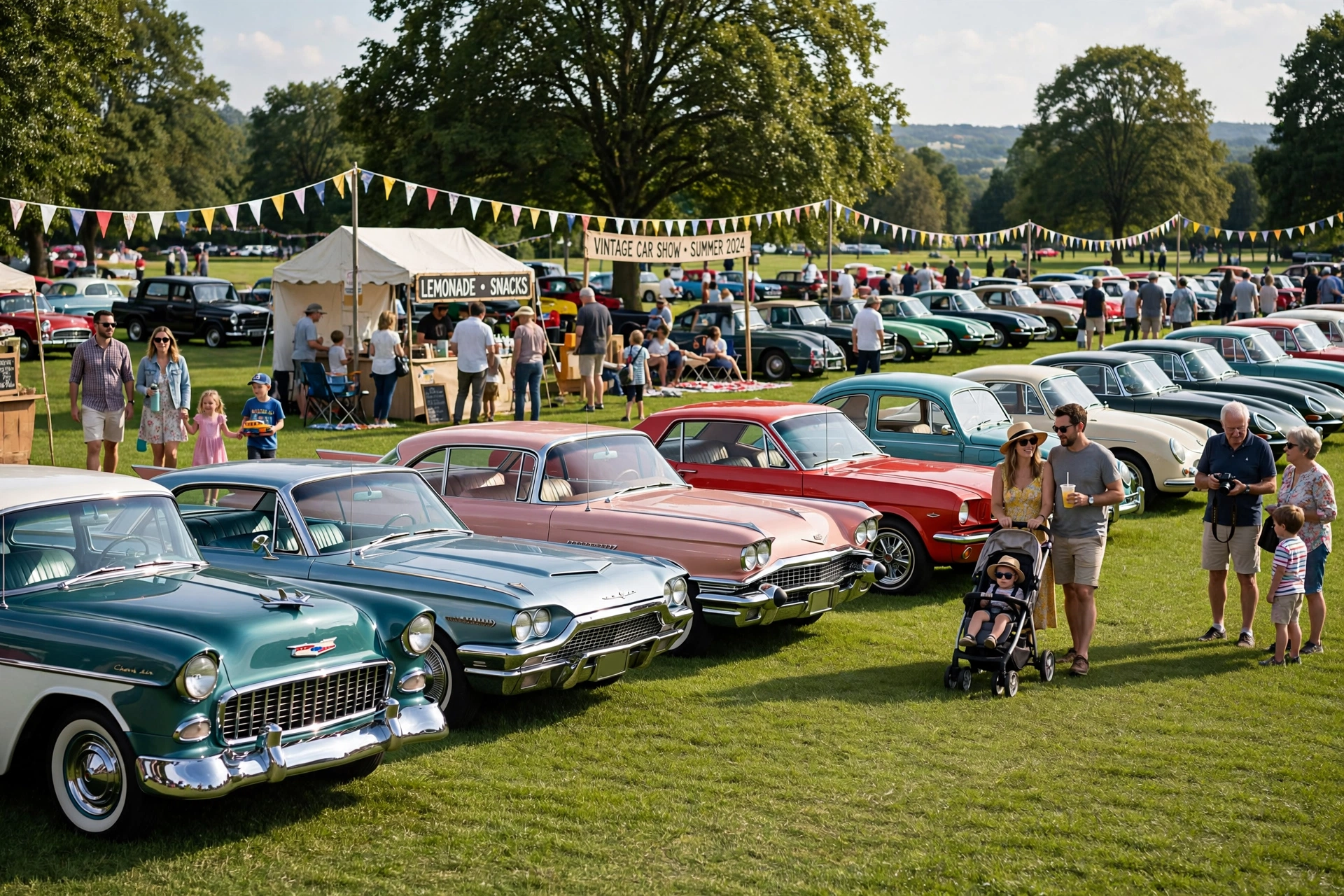
On any given weekend, somewhere not far from you, a field or parking lot is filling up with gleaming chrome, rumbling V8s and the smell of vintage leather. Vintage car shows are where classic car culture comes alive — part exhibition, part social gathering, part open-air museum — and they are one of the most enjoyable ways to experience the hobby.
Whether you want to wander the rows as a spectator or work up the courage to show your own car, this beginner’s guide covers everything you need: the types of shows, the unwritten rules, how judging works, and how to make the most of your day.
What Is a Vintage Car Show?
At its simplest, a vintage car show is a gathering where owners display their classic, antique or otherwise special vehicles for fellow enthusiasts and the public to enjoy. But that simple description covers an enormous range — from a dozen friends meeting in a parking lot on a Friday night to prestigious international events with million-dollar automobiles on manicured lawns.
What unites them all is the people. Car shows run on generosity: owners who spend countless hours maintaining their cars, then stand beside them all day answering the same questions with genuine enthusiasm. It is a culture built on shared passion, and newcomers are welcomed far more warmly than they expect.
Types of Shows You’ll Encounter
Concours d’Elegance
The formal end of the spectrum. Prestigious judged events, often held on elegant grounds, where exceptional automobiles are evaluated on authenticity, condition and presentation. Spectating is a delight — think of it as a museum where the exhibits arrived under their own power. Standards and etiquette are at their highest here.
Cruise-Ins and Casual Meets
The relaxed heart of the hobby. Informal gatherings — often weekly or monthly — where anyone with an interesting car simply shows up, parks, and socializes. No judging, no registration stress, no trophies. If you are new to the scene, start here: the barrier to entry is zero and the atmosphere is pure enjoyment.
Marque and Model-Specific Shows
Events dedicated to a single brand or model — all Mustangs, all air-cooled Porsches, all British roadsters. These are fantastic for learning, because you can compare dozens of examples side by side and absorb the collective knowledge of the most dedicated owners on earth.
Swap Meets and Auto Jumbles
Part car show, part treasure hunt. Vendors sell parts, memorabilia, literature and project cars. Even if you are not restoring anything, wandering the aisles is an education — and you will almost certainly find something you did not know you needed.
Attending as a Spectator: The Etiquette
Car show etiquette is mostly common sense, but a few unwritten rules matter:
- Look with your eyes, not your hands. Never touch a car without the owner’s explicit permission. Fingerprints on fresh paint and leaning on fenders are the fastest way to make enemies.
- Ask before photographing closely — most owners are delighted, but asking is polite, and it often starts a great conversation.
- Watch children and food carefully. Keep little hands, ice cream and drinks well clear of the vehicles.
- Do not sit in a car uninvited. If an owner offers, wonderful — otherwise, admire from outside.
- Ask questions respectfully. “What can you tell me about your car?” opens doors; challenging someone’s restoration choices does not.
- Respect ropes and boundaries. If a car is roped off, there is a reason.
- Support the event. Buy the program, visit the vendors, donate if asked — shows cost money to run.
Showing Your Own Car: Taking the Plunge
Thinking of displaying your car? Do it. You do not need a trailer queen — most local shows welcome anything interesting, and the “driver” class exists precisely for cars that are enjoyed rather than coddled.
Start with a casual cruise-in or local charity show rather than a judged concours. Registration is usually simple and inexpensive. Arrive early, follow the parking volunteers’ directions, and bring a small display sign with your car’s basic story — year, model, and anything interesting about its history. Visitors love context.
Prepare the car the way you would for a proud moment: washed, vacuumed, windows clean, engine bay wiped down, tires dressed. You are not chasing perfection — you are showing respect for the event and your fellow exhibitors. Then relax, stand by your car, and enjoy talking to people who genuinely want to hear about it.
What Judges Look For
If you enter a judged class, it helps to understand the criteria. While specifics vary, judges generally evaluate:
- Condition: the quality of paint, chrome, interior and brightwork — cleanliness and care count enormously.
- Authenticity: how correct the car is for its year and specification — proper finishes, period-correct parts, factory-style details.
- Presentation: overall impression, including engine bay, trunk and undercarriage where judged. Details like correct hose clamps and proper markings separate winners.
- Operation: at some events, cars must demonstrate that systems work — lights, horn, engine running.
Do not be intimidated. Judging is feedback, not a verdict on your worth as an enthusiast. Many owners find that preparing for judged shows dramatically improves their knowledge of their own car.
What to Bring: The Day-Show Checklist
- Comfortable walking shoes, sunscreen and a hat — you will be on your feet for hours.
- A folding chair if you are exhibiting (and often even as a spectator at casual meets).
- Water and snacks, especially at large outdoor events.
- Cash — many vendors and food stalls do not take cards, and raffles are cash-only.
- A camera or phone with charge to spare — you will take more photos than you expect.
- A notebook if you are car-hunting or researching a restoration — note colors, parts and owner tips.
- Cleaning supplies and a display sign if you are showing your car.
- Patience and curiosity — the two most valuable things you can bring.
Making the Most of the Day
Arrive early for the best light, the thinnest crowds and the chance to watch cars roll in — half the show is the arrival. Walk every row before deciding favorites; the car that stops you in your tracks is often one you have never heard of. Talk to owners — ask what they love about their car, what surprised them, what they would do differently. Enthusiasts are walking encyclopedias who love sharing.
If you are thinking of buying a classic, shows are research gold: you can compare models, sit in cars, hear engines run and collect owner contacts and club information. And if you brought your own car, savor it — there is no better feeling than a stranger telling you your car made their day.
Your Invitation
Vintage car shows are the friendliest corner of the automotive world. No ticket to expertise is required — just curiosity and respect for the machines and the people who keep them alive. Find a local cruise-in, bring a friend, and go. By the end of the day, you will understand why people devote their weekends, garages and hearts to old cars — and you might just start planning your own place in the rows.

Arsalan Shaikh is the founder and editor of CarModels.online. A lifelong car enthusiast, he writes practical, jargon-free buying guides to help readers choose the right car with confidence — from first-time buyers to seasoned owners.