Few industries are changing as quickly as the automobile. The car you buy five years from now may look familiar on the outside, but under the skin it will be a fundamentally different machine — powered by new battery chemistry, guided by increasingly capable software, and constantly connected to the world around it.
In this guide to future car technology, we walk through the breakthrough technologies closest to reaching everyday drivers: solid-state batteries, autonomous driving, vehicle-to-everything communication, smarter driver assistance, and over-the-air updates. None of these are science fiction anymore. Here is what each one means for you as a car buyer.
Solid-State Batteries: The Next Leap in Range
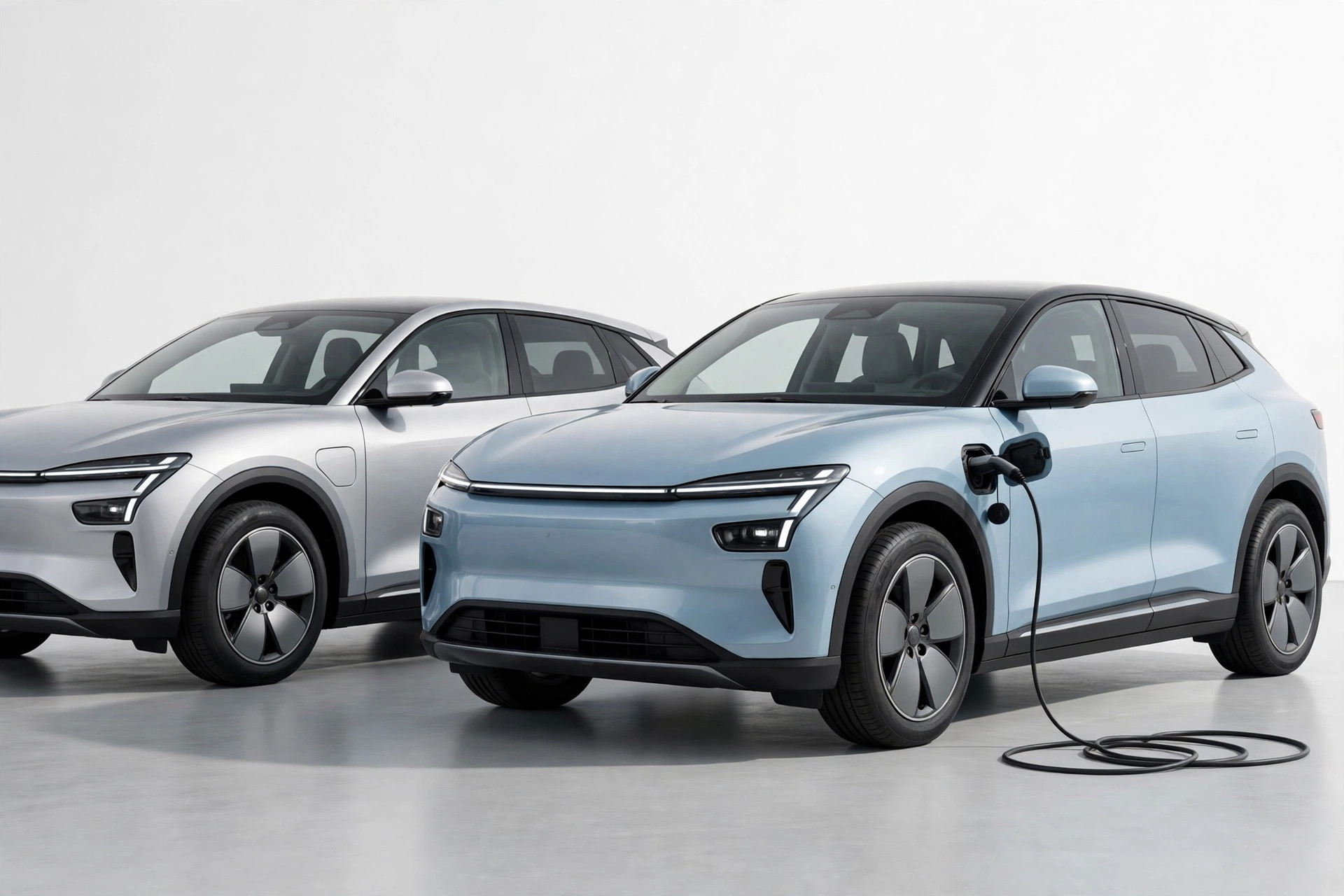
Today’s electric cars run on lithium-ion batteries with liquid electrolytes. Solid-state batteries replace that liquid with a solid ceramic or polymer material — a change that could reshape what electric cars can do.
Why Solid-State Matters
Solid-state cells promise meaningful advantages over current batteries:
- Longer driving range from a battery pack of the same size, because solid electrolytes allow denser energy storage.
- Faster charging, with the potential for dramatically shorter charging stops compared with today’s fast chargers.
- Improved safety, since solid materials are less flammable than the liquid electrolytes used in current cells.
- Longer battery life, with less degradation over years of repeated charging.
For buyers, the practical result is simple: electric cars that go further, charge faster, and hold their value longer.
The Road to Mass Production
Building solid-state batteries at the scale and cost the auto industry needs is still a serious engineering challenge. Manufacturing is complex and costs remain high. Still, major automakers and battery suppliers are investing heavily, with pilot production lines already running and early commercial applications expected in premium models first. For mainstream buyers, the realistic timeline is gradual: expect the technology to arrive in select vehicles before it becomes common across affordable models.
Autonomous Driving: Moving Through the Levels
Self-driving technology is usually described in six levels, from 0 (no automation) to 5 (full automation in all conditions). Understanding where we are on that scale helps cut through the hype.
Where the Technology Stands Today
Most new cars sold today sit at Level 1 or Level 2: the car can help with steering, braking, or acceleration, but the driver must stay fully engaged and keep their hands on the wheel. A small number of systems operate at Level 3 in limited situations, such as traffic jams on approved highways, where the driver can briefly look away but must be ready to take over.
What Comes Next
The jump to higher levels is as much about regulation and infrastructure as technology. Expect the coming years to bring wider availability of Level 3 systems in premium cars, expanded driverless taxi services in select cities, and steady improvements in the assistance features on ordinary family cars. Full Level 5 autonomy — a car that needs no driver at all, anywhere — remains a long-term goal rather than an imminent reality.
Vehicle-to-Everything (V2X) Communication
V2X allows cars to talk to each other, to traffic infrastructure, to pedestrians’ devices, and to the network. A car approaching a blind intersection could receive a warning about a vehicle it cannot see. A traffic light could tell approaching cars exactly when it will change, letting them adjust speed to avoid stopping.
The safety potential is enormous: many crashes happen because drivers lack information, and V2X fills those gaps. As more vehicles and more cities adopt the technology, its benefits multiply. For buyers, V2X will arrive quietly — built into new cars as a background safety layer you never have to think about.
Advanced Driver Assistance Gets Smarter
Even without full autonomy, driver-assistance systems are becoming far more capable. Cameras, radar, and ultrasonic sensors are being joined by more powerful onboard computers that can interpret complex scenes: a child stepping toward the road, a cyclist in a blind spot, a car braking suddenly two vehicles ahead.
Features to watch for include:
- Improved automatic emergency braking that works at higher speeds and detects pedestrians and cyclists more reliably.
- Hands-free highway driving on mapped roads, with driver-monitoring cameras ensuring you stay attentive.
- Smarter parking assistance that handles tight spaces and can even park the car remotely.
- Driver monitoring that detects drowsiness or distraction and issues timely warnings.
When comparing cars, look beyond the feature list: ask how these systems perform in independent safety ratings, because real-world effectiveness varies widely.
Over-the-Air Updates: A Car That Keeps Improving
One of the biggest shifts in modern cars is that they are no longer finished products on the day you buy them. Over-the-air (OTA) software updates let manufacturers fix bugs, improve efficiency, and add new features without a dealership visit — much like your phone.
For owners, this means a car that can genuinely get better over time: longer range from optimized battery management, a more responsive infotainment system, or new driver-assistance capabilities unlocked years after purchase. When shopping, it is worth asking which systems in a car receive OTA updates and whether they are free — the answer varies considerably between brands.
Future Car Technology: What This Means for Your Next Car
You do not need to wait for the future to benefit from it. Many of these technologies are arriving incrementally, and each model year brings more of them into mainstream price ranges. When you shop, prioritize the technologies that matter to your daily driving: battery range and charging speed if you are considering electric, driver-assistance ratings if you commute on highways, and software update policies if you plan to keep the car for many years.
The car of the near future will be safer, cleaner, and smarter — and thanks to the pace of change, you may not have to wait long to drive one. For more on where all of this is heading, see our guide to the future of cars: trends to watch in 2026.

Arsalan Shaikh is the founder and editor of CarModels.online. A lifelong car enthusiast, he writes practical, jargon-free buying guides to help readers choose the right car with confidence — from first-time buyers to seasoned owners.